School Blog
Page: 2 of 22 | Entry: 11 to 20 | << next | previous >>
MOVIMIENTO POR LA PAZ
Escuela Montalbán has started to collaborate with the NGO Movimiento por la Paz de Granada. It is an independent, secular and progressive movement that since 1983 has been working for the fulfilment of human rights, democratic governance, equality and solidarity between individuals and nations.
Our school will offer scholarships to refugees under the tutelage of this association.
GUIDED CULTURAL WALKS WITH FRANCISCO
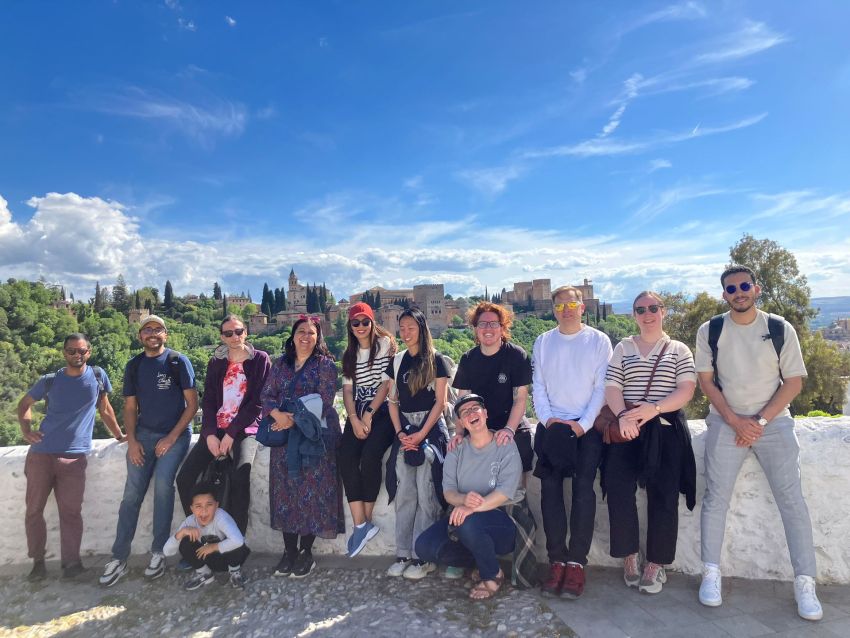
In spring we offer regular weekly cultural walks with our teacher Francisco. Some options are:
- Guided visit to the Granada Sciene Park
The Parque de las Ciencias de Granada is an interactive museum located in the Spanish city of Granada. It was inaugurated in May 1995 and currently occupies 70 000 m². It is located in an area of the Figares district and has become one of the main tourist attractions of the city.
- Walk to the forest of the Alhambra
The "Bosque de Alhambra" is the forest that encircles the fortres Alhambra. Its boundaries is generally set by the fence surrounding the complex which starts at the bastion tower "Torre de los Picos" on the north bank of the river Darro, and to the wall that connects the Alhambra with the "Torre Bermejas" towers which covers northern and western area around the Moorish fortress
- Literary walk to the Fuente del Avellano
This walk along the left side of the River Darro will bring you closer to the history of poetry and literature in Granada. In 1897, Ángel Ganivet and Fuente del Avellano fraternity were gathering together next to this fountain, while enjoying the views of the caves and the Sacromonte Abbey. Since 2003, several plates with poems written by local and international authors are along the way guiding you to the fountain.
-The viewpoints of the Sacromonte
The Sacromonte district of Granada has several viewpoints offering panoramic views of the city, including the Alhambra, the Generalife and the Albaicín. One of the most outstanding is the Mirador de las Cuevas, located next to the Museo Cuevas del Sacromonte, which offers sweeping views of the Alhambra and the city.
SECONDARY SCHOOL TRIP TO GRANADA
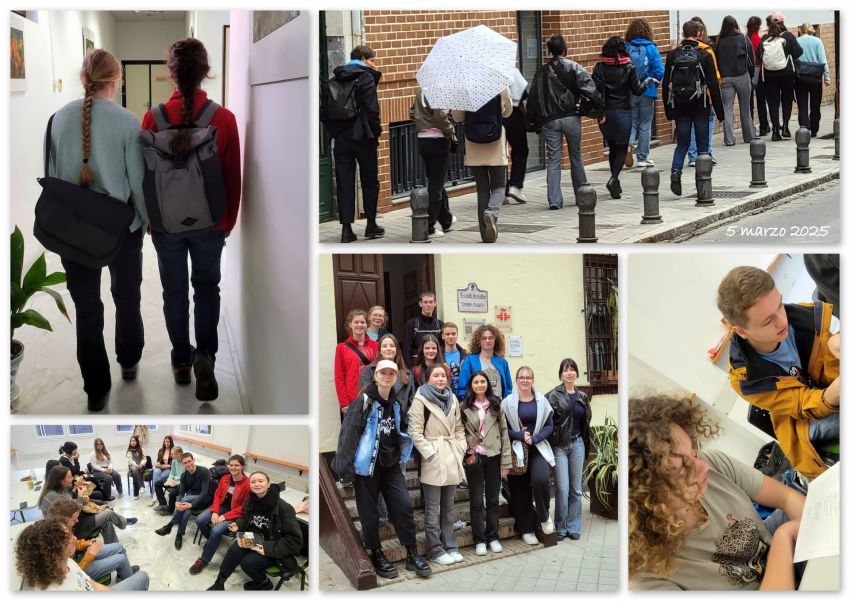
Discover our language immersion trips to Granada specifically designed for secondary school groups from all over Europe. We offer a unique opportunity to enhance Spanish language skills. Through engaging interactive activities and enriching intercultural experiences, students immerse themselves in the heart of authentic Andalusian culture.
Provide your students with an unforgettable trip to Granada, where they can explore our vibrant heritage while developing their language proficiency. Our programs combine education with adventure, ensuring a well-rounded experience that fosters Spanish language mastery and a deeper appreciation of our local culture.
Our school already started to organize the first secondary school trips in 2025. Among several other groups, a small group of adolescent students visited us from the Ökumenisches Domgymnasium in Magdeburg, Germany.
Their programme consisted in 3 hous of Spanish in the mornings, host family accommodation with full board and cultural activities such as Flamenco at the Zambra Maria La Canastera at the Sacromonte area, a guided visit to the Arab quarter Albaicín and a guided visit to the Alhambra.
SPANISH COURSE PROGRAMME 2025
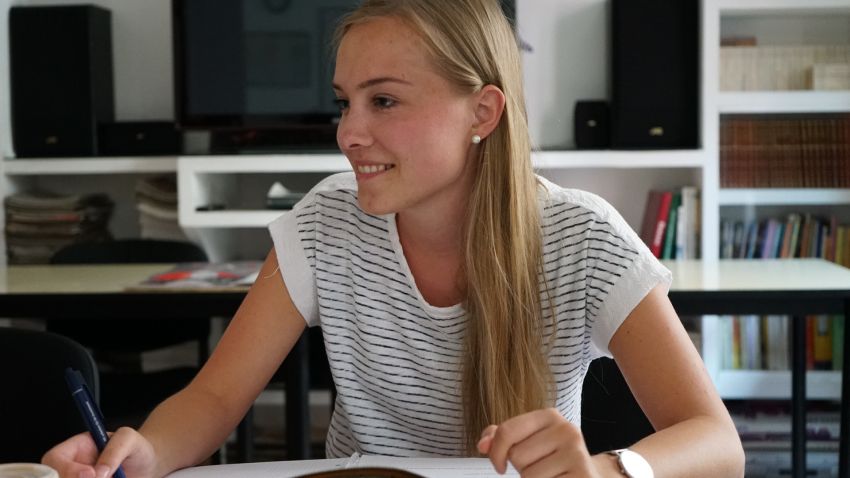
We are pleased to present you our next year Spanish course programme.
We have actually maintained the prices of our main courses for 2025 with some news and exceptions.
Please find here our new dates and prices for next year!
TANDEM LANGUAGE SCHOOLS ANNUAL MEETING
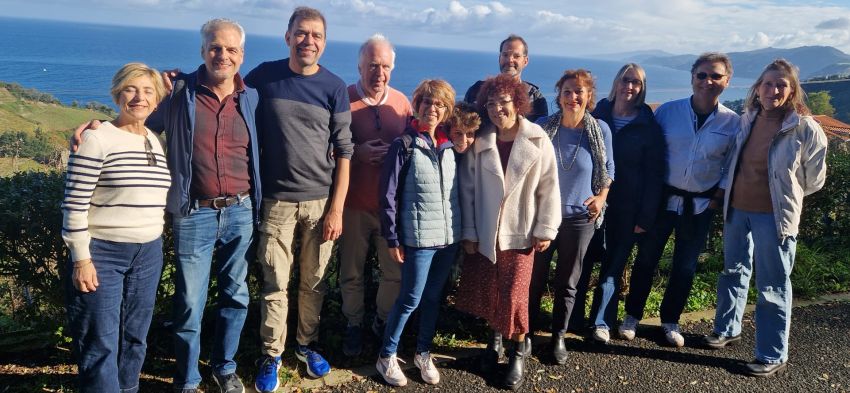
Last weekend we held our annual TANDEM LANGUAGE SCHOOLS meeting in beautiful San Sebastián. Member schools from Bremen, Hamburg, Kóln, Frankfurt, München, Madrid, Granada and Barcelona joined the meeting. Our member school TANDEM San Sebastián organized the meeting and offered us an amazing cultural programme during the weekend.
TANDEM Language Schools is an association of independent, non-profit German and Spanish language schools in Germany, Spain and Chile. Alongside lively, highly professional language lessons, all the schools offer their course participants a wealth of opportunities for intercultural encounters, personal contacts and experiencing a new culture. For us, learning languages and getting to know foreign cultures are inseparable.
Each member school cultivates its own learning environment, shaped by the local region. At the same time, all schools meet their jointly defined, verifiable quality standards. As independent organisations, the schools can react flexibly to the wishes and needs of participants. By using modern language teaching methods, all schools create a strong basis to build contact, interaction and understanding between people from different cultures.
THE CULTURE OF ANDALUS IN GRANADA
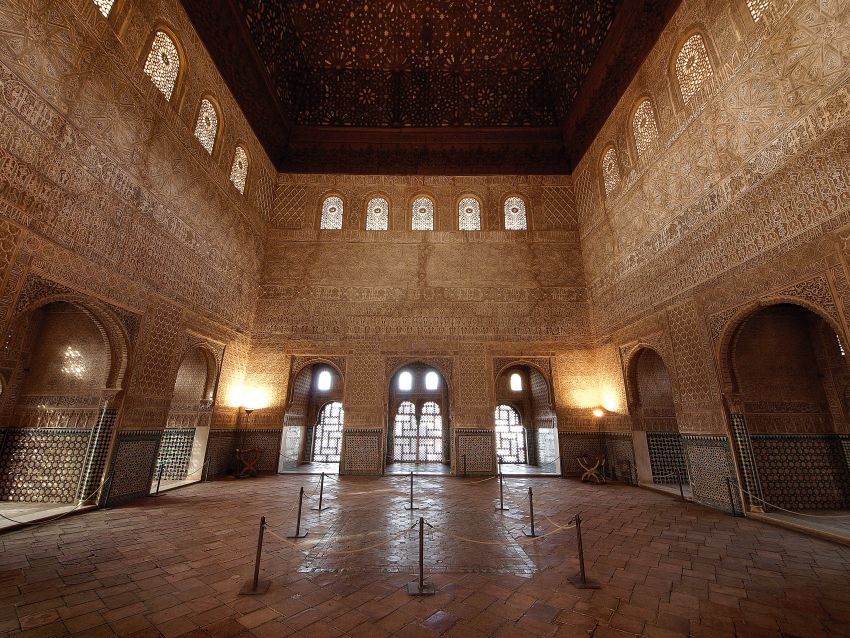
Granada is very elegantly poised with Arab-influenced architecture, gypsy-inhabited caves and Iberian culture.
As the last city to be returned to the Christian conquistadors after several hundred centuries of Muslim ruling, our city still bears evidence to its Arabic influence to this day. The Alhambra was built during the Moorish reign in the 15th century, and still stands proud and majestic on the hill.
Other signs of Arab influence can be seen in the Albaicín, one of the oldest and most fascinating areas. Perched on a hilltop it consists of steep cobblestoned paths and white-washed houses. Arab teahouses and Moroccan shops line the narrow street that leads up to the hilltop. The perfect way to relax after a day, is to have a glass of sweet tea in one of the Arab teahouses or relax in an Hammam, an Arab bath.
You will visit the Alhambra wit one of our teachers, the city center, the Albaicín and the Arab bath. You will complement the visits with workshops about moorish history, calligraphy and cooking.
As part of our programme for non-native Spanish teachers we offer this 1 or 2 wks monographic course related to Arab culture in Granada. The programme combines an Intensive 20 Spanish course (Level C1/C2) with cultural activities related to Arab history in our city. For further information have a look at the course progamme.
FEDERICO GARCÍA LORCA
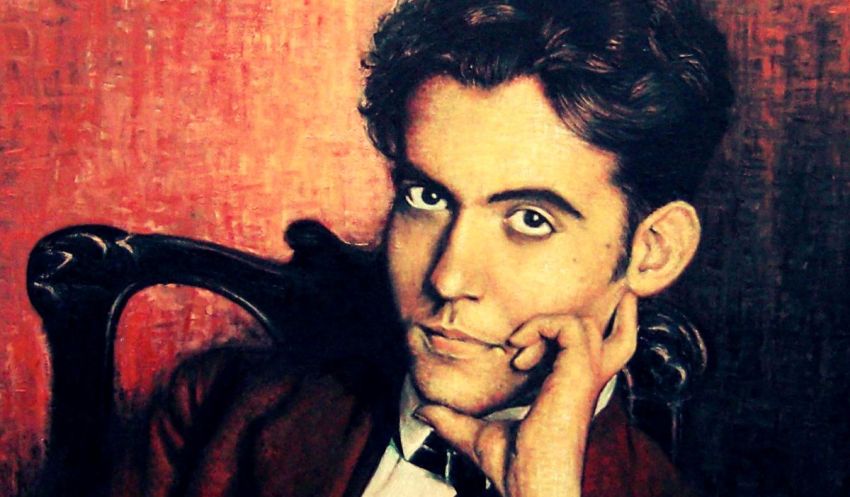
Federico García Lorca was a famous Spanish poet and theater director. He published numerous volumes of poetry during his lifetime. His lyrical work often incorporates elements of Spanish folklore, Andalusian flamenco and Gypsy culture, and cante jondo, while exploring themes of romantic love and tragedy.
Federico García Lorca was born near Granada in Fuente Vaqueros. He studied law at Granada University before relocating to Madrid in 1919. In Madrid, he was part of a group of avant-garde artists known as the Generación del 27, that included artist such as Salvador Dalí, Luis Buñuel, Juan Ramón Jiménez, Rafael Alberti, Jorge Guillén, and Pedro Salinas. Around this time, García Lorca was introduced to surrealism, a movement that would greatly influence his writing.
With the publication of his Romancero Gitano, García Lorca received significant critical and popular attention. The following year, he travelled to New York City, where he found a connection between Spanish cante jondo and African American spirituals.
When he returned to Spain in 1930, García Lorca cofounded La Barraca, a travelling theater company that performed both Spanish classics and his plays in small town squares. Despite the threat of a growing fascist movement in Spain, García Lorca refused to hide his leftist political views. García Lorca’s homosexuality and political affiliations likely rendered him a target for nationalist forces during the Spanish Civil War.
In August 1936, at the onset of the Spanish Civil War, García Lorca was arrested in Granada by Francisco Franco’s soldiers. He was executed by a firing squad a few days later, and his body was never found.
As part of our programme for non-native Spanish teachers we offer a 1 or 2 wks monographic course related to Federico García Lorca. The programme combines an Intensive 20 Spanish course (Level C1/C2) with cultural activities related to Lorca's life in Granada. For further information have a look at the course progamme.
SCHOOL CONTEST IN POLAND
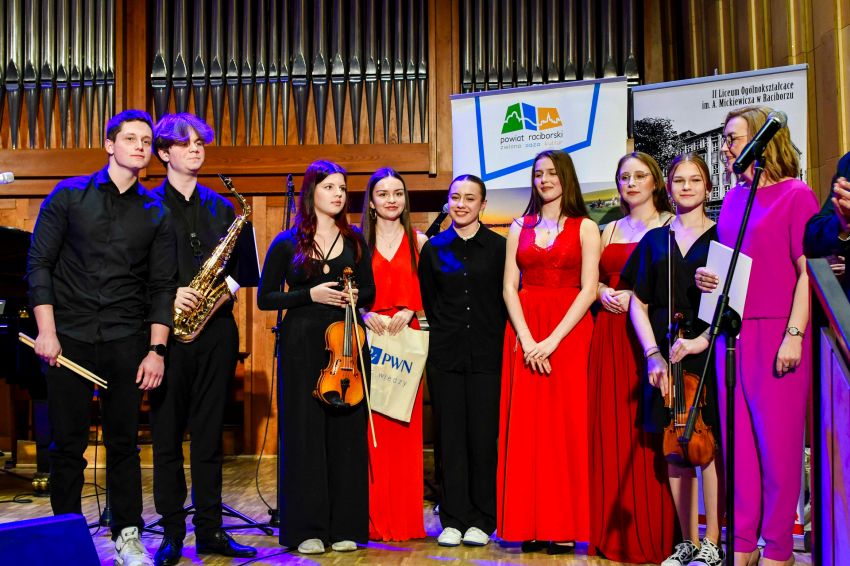
On 19 April 2024 the tenth edition of the Spanish song contest has taken place at the II Liceum Ogólnokształcące in Racibórz, Poland. As in the past, our school has participated in the event and has offered a free 1 week Spanish course for one of the winners. We were present in the promotional materials and during the gala concert.
The song contest was magnificent. Participants came from all over the country. The level of performances was fantastic.
The prize of Escuela Montalbán was won by one of the following participants: Zuzanna Hezner, Patrycja Baran, Weronika Kramarczyk, Zuzanna Szpilarewicz, Zofia Pawlik, Mateusz Przebindowski, Natalia Smagacz, Szymon Tucki, Milena Szuster.
SPANISH NATIONALITY EXAM - DELE A2
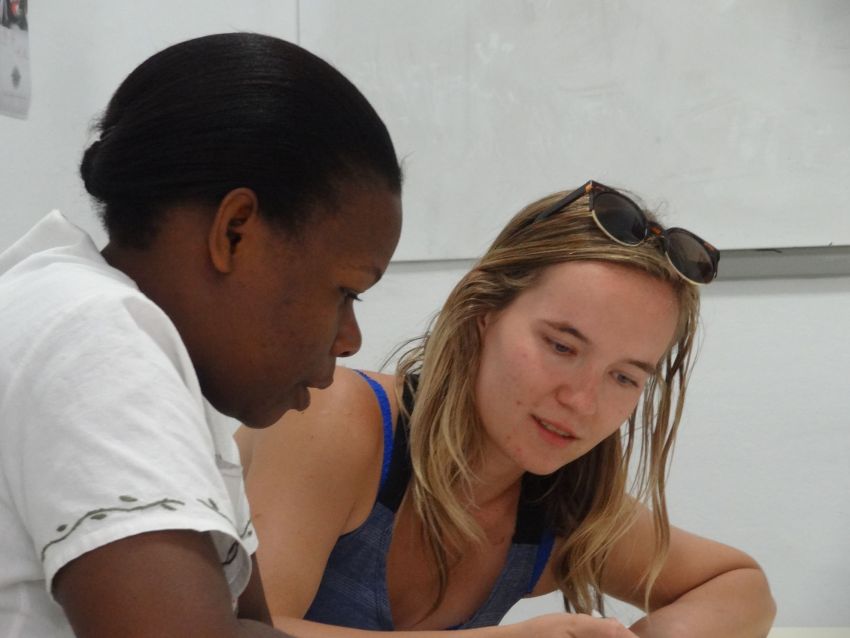
The next DELE A2 exam of 2024 will take place at our school on the 12 of April.
This Spanish language exam serves to certify that you have a sufficient level of Spanish in order to understand and communicate clearly. The exam was reformed in 2020 and presents important differences in relation to what we have seen until now.
Below we detail its current structure, which came into force in February 2020.
The exam is divided into 4 different parts:
1. Reading comprehension test (60 minutes)
This part has 4 tasks. These tasks are related to your daily life and the environment in which you live. There are 25 questions of which you must get at least 60% of the answers. The first task consists of reading an e-mail, about 250 words long, and answering 5 questions. Task number 2 consists of 8 announcements/job offers, and you will have to answer one question from each one. In task 3 you will find 6 questions. You will have to read 3 texts and relate each of them to 6 different statements. Finally, the last task in this section consists of a slightly longer text, about 350-400 words, that creates 6 questions to be answered.
2. Listening comprehension test (40 minutes)
The listening test is also divided into 25 questions divided into 4 different tasks. Again, you should get a 60% right (minimum). Each audio is played twice. And you will always listen to an example first so that you can understand the mechanics. Task 1 consists of 6 short, informal conversations and 3 pictures. You will have to relate each conversation to the 3 pictures. Task 2 consists of 6 short announcements, with 3 possible answers. In task 3, you will listen to a conversation. You have 6 statements, and you need to answer questions about the interlocutors of that conversation. Finally, in task number 4 you will hear 7 messages, and you must relate them to 10 statements, out of which 3 won't be selected (you must discard them).
3. Written expression (45 minutes)
This writing test, which used to have 3 tasks, is now reduced to just 2. The first text to be written is a letter, between 60 and 70 words. You will have to read what someone writes to you, and answer him or her trough your letter, including everything that is asked in the statement. In the second part you can choose between two different options. Option A is an everyday text, in which you have to write about yourself. Option B is a narrative text, in which you have to talk about events or an anecdote. Here the text should be 70 or 80 words long.
4. Oral expression
It consists of 3 tasks that you will prepare in a preparation room for 12 minutes. Afterwards, you will carry out each of them with the examiner. Task 1 consists of a 2 or 3-minute monologue on a topic, from two options to choose from.
In Task 2 you will choose from 2 pictures. You will prepare a description of the photo you have chosen. Finally, task 3 is related to the previous one. It is an informal conversation between you and the examiner in which you will discuss the chosen photo.
* Between tests 2 and 3 there is a break, so as you can see, it roughly takes about 3 hours.
For further information regarding additional exam dates and the registration process visit our website.
Page: 2 of 22 | Entry: 11 to 20 | << next | previous >>
Categories